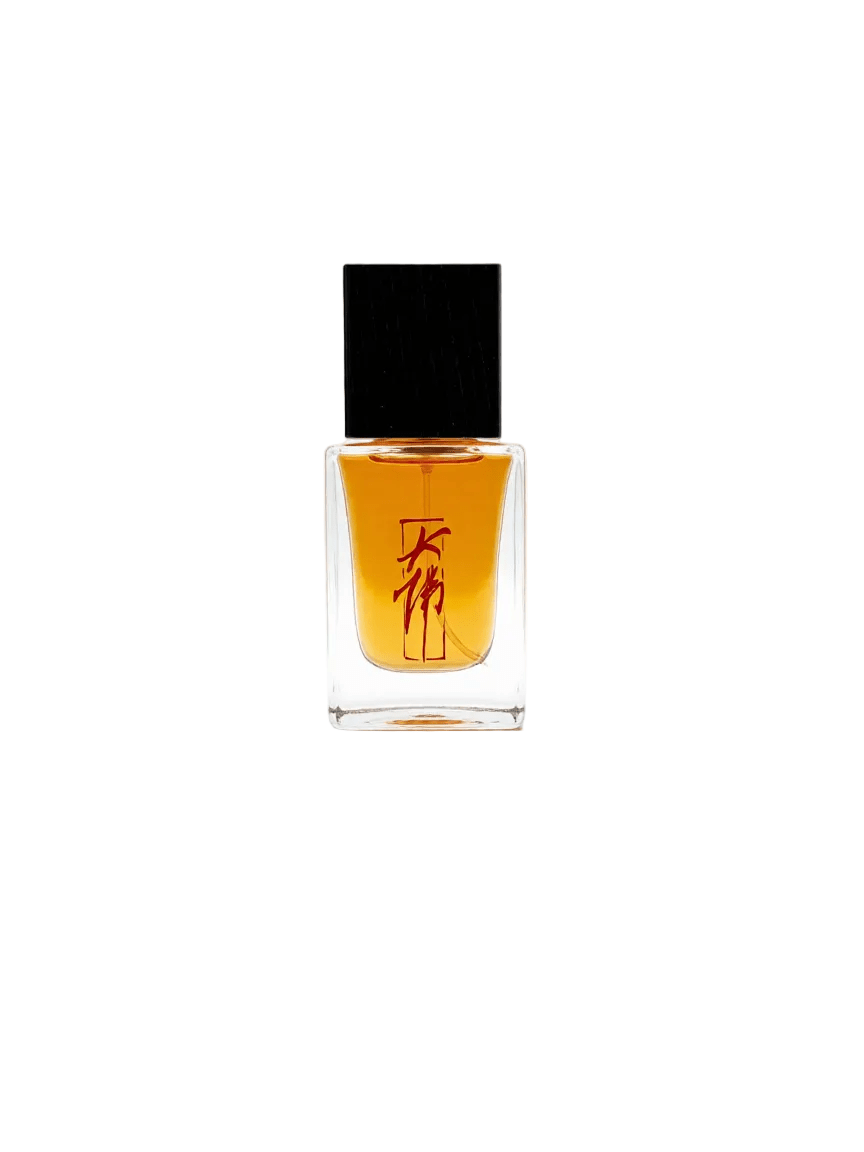


Damfool Watting Warbler
Elixir de Parfum
products.product.pickup_availability.unavailable
The Story
The women of Songbai Village? All radiant—like moonlight caught in river water. Folks say it's the stream: pure mountain spring, first to tumble down the slope, first to fill the village wells.
"Mountain water doesn’t just quench thirst," old Granny Lin always says, "it *polishes* skin."
Yan Niang lived right where the stream spills into the village, right at the mouth. Every dawn, before the roosters even stretched, she’d be there with her wooden basin, rinsing her hair in that cold, clear flow. No soap. No shampoo. Just water—and that thick, glossy black hair, like ink spilled on silk. Word got around fast: "That water grows hair."
Soon, the bank was lined with girls kneeling, dunking, laughing, water dripping off their chins. The men? They’d lean on fence posts, sipping coarse tea, and grin: "We drink what the girls wash their hair in—no wonder our daughters glow like water lilies."
Yan Niang left the village young, same as every other girl when the peach blossoms were thickest and the world felt wide open. But while the others took day jobs in factories or teahouses, Yan Niang worked nights. Nobody asked why—and nobody ever got an answer.
She came back three times. First, when her mother stormed out, suitcase in hand, threatening to vanish forever—Yan Niang walked twenty miles home barefoot to bring her back. Second, when her father passed, she sat by his coffin for three nights straight, burning incense, not speaking. Third time? A black sedan rolled in—tinted windows, silent engine. No name announced. No one waved goodbye. Just Yan Niang stepping out, head high, suitcase small. And after that? She never left again.
Twenty years later, she still came to the stream each morning—but now, she’d bend, rinse, then pause, hands on her lower back, breathing deep before straightening up and rubbing it. You could hear her sigh sometimes—soft, steady, like the water itself.
Walk past her on the lane? Men still murmur over their tea: "Look at her—she hasn’t changed."
No woman from Songbai marries out. It’s just how it is. So the aunties—bless their busy mouths—kept nudging Yan Niang: "Find a good man, settle down, have kids!" She’d just smile, warm but unshaken, tap her chest once, and say, "He’s already here. Said he’d come back... and marry me."
Then came the cough—dry, deep, rattling. Then blood on the handkerchief. Then silence, just three days from first cough to last breath.
When the village office sent someone to collect her body, they found no photos. No letters. No name on a drawer. No kin listed anywhere. So they cremated her quietly, respectfully, and placed her ashes in a plain ceramic jar, set on the shelf in the ancestral hall, between Old Man Wu and Third Auntie Li.
Then, out of nowhere one misty morning, a man in crisp, faded olive uniform showed up. No ID shown. No questions asked. He handed the clerk a cloth bundle, rough, folded tight—and said only, "I’ll take her." They buried her under a tall, straight pine—on the *far* side of the stream, where the water curves and slows.
Later, over sweetened tea in the village office, Auntie Mei—who saw everything—leaned in and whispered: "Before he buried her, he opened the jar. Took a handful—scattered it in the stream. Took another—rubbed it on the pine trunk, like anointing. Took the third—wrapped it tight in that same cloth, tucked it inside his coat." She paused, stirred her tea slowly, then added: "Tall man. Like he’d been carved from the same mountain stone—and washed in the same water—as her."
They opened the cloth bundle later. Inside? A stack of US dollars—neat, crisp, untouched by time.
The Notes
The Perfumer
The House